Autumnal Roamer
Waking with the House: A Retired Couple's First Foray into the Modern Casino Resort
Written by Arthur & Evelyn Hayes | June 10, 2026 | 10 min read
For thirty years, our vacations followed a predictable, comfortable geography. We booked historic inns in Vermont, small coastal cottages in Maine, or the occasional quiet bed-and-breakfast in Virginia. Our requirements were modest: a porch with two chairs, a good library within walking distance, and a breakfast that did not involve lines. When our children gifted us a three-night stay at the Oasis Mirage Resort in New Mexico for our fortieth anniversary, our initial reaction was a mixture of gratitude and quiet apprehension. The brochure showed a twenty-story tower rising from the desert, five swimming pools, and a gaming floor larger than our entire home neighborhood. It did not look like our kind of quiet.
Yet, we decided to approach it as an experiment. In retirement, there is a tendency to let one's world shrink, to self-select only those environments that present zero friction or surprise. Stepping off the plane and boarding the resort shuttle, we resolved to keep our eyes open and evaluate this modern American leisure phenomenon with an open mind. What we discovered was that a massive casino resort, when approached with a bit of planning and a willingness to adjust one's rhythm, can offer a surprisingly comfortable and peaceful retreat, even for those who have never pulled a slot lever in their lives.
The Anatomy of a Slow Morning
Our first revelation occurred at 6:30 AM on our first morning. Having lived our lives by the clock of school runs and corporate careers, we remain early risers. At home, this is the time for coffee and the morning paper. At the Oasis Mirage, we discovered that 6:30 AM is the hour when the resort belongs to the staff and the early birds. The casino floor, which had been a loud, dizzying sea of music and crowds when we arrived the night before, was bathed in a strange, peaceful calm. The flashing lights of the slot machines continued their dance, but the sound was turned down, and the crowds were gone.
We walked through the cavernous lobby toward the conservatory dome, a massive glass structure filled with thousands of real desert plants, waterfalls, and brick pathways. In the quiet morning light, the only sounds were the rushing water and the soft snip of gardeners pruning the hibiscus bushes. We found a stone bench under a palm tree and sat for an hour, reading our books and watching the light filter through the glass paneling. It was as peaceful as any botanical garden we had visited in New England, with the added benefit of being entirely indoor and climate-controlled against the early desert chill.

The resort's glass conservatory dome at 7:00 AM, offering a tranquil space for reading and walking before the daily crowds arrive.
After our walk, we found a small bakery counter near the hotel elevators. Unlike the massive breakfast buffet, which we observed later in the morning with its long lines and hectic energy, this bakery was quiet. We ordered two cups of black coffee and fresh pastries, sitting at a small table by the window overlooking the empty outdoor pool area. Waking up early allowed us to bypass the institutional scale of the resort entirely, carving out a private, slow-paced vacation within the margins of a three-thousand-room hotel.
The Learning Curve: Craps and Camaraderie
By the second day, we felt it was time to address the elephant in the building: the gaming floor. Neither of us had ever played a table game. The green felt tables, the complex layouts of numbers, and the rapid jargon of the dealers had always felt like a private club to which we didn't have the password. However, we noticed a sign advertising free "gaming lessons" at 10:00 AM in a quiet corner of the casino floor.
We joined a small group of about six other retirees around a craps table. The instructor, a dealer named Frank who had worked in the desert for thirty years, was a master of patience and dry humor. He broke down the game not as a mystery, but as a simple set of math rules and social etiquette. He showed us how to place our chips, what the different areas of the table meant, and how to interact with the dealers. For the first time, the noise of the casino floor transformed from a wall of sound into a set of distinct, understandable events.
"The table games are not just about luck; they are social clubs. Once you understand the rules, the intimidation disappears, replaced by a shared human drama."
Later that afternoon, we mustered the courage to sit at a low-stakes blackjack table with a five-dollar minimum. We decided to play with a small budget—fifty dollars each—which we regarded as the price of our afternoon entertainment, no different from buying a theater ticket. The dealer was encouraging, gently correcting our hand signals and helping us calculate our totals. We spent two hours at that table, chatting with a retired schoolteacher from Illinois and a young businessman from Denver. We didn't win any fortunes—Evelyn walked away up twelve dollars, and Arthur lost fifteen—but we left with a sense of accomplishment. We had demystified a part of modern culture we had previously dismissed.
The Geography of Energy
One of the most valuable lessons of our stay was learning to manage our energy in relation to the resort's physical scale. A building that spans several football fields requires a lot of walking, which can be exhausting for older joints. We quickly learned that the resort's layout was not random; it was structured in zones of energy. The central core was the high-energy zone: the casino, the retail promenade, the main bars. The outer rings were the low-energy zones: the spa, the convention corridor, the residential towers.

Attending the morning table lessons demystified the green felt and turned a source of anxiety into an engaging social activity.
By structuring our day so that we only crossed the high-energy zones when necessary, we kept our fatigue to a minimum. We requested a room near the main elevator bank to reduce the long corridor walks, and we made sure to take advantage of the numerous seating pockets scattered throughout the property. These pockets—often featuring plush armchairs and low lighting—were clearly designed for players to rest, but they worked just as well for two retirees looking to catch their breath and watch the world go by.
Reflections on the Ledger
On our final evening, we dined at a quiet steakhouse located near the rear gardens. Over our meal, we talked about whether we would return to a resort like this on our own budget. The honest answer was a qualified yes. We would not choose it for every trip—we still crave the quiet woods of Vermont and the salt air of the Maine coast—but we recognized that the casino resort offers a level of service and convenience that is hard to find in smaller properties.
The sheer size of the operation means that everything is handled with a high degree of professional efficiency. Our room was spotless, the bed was exceptionally comfortable, and the staff—from the bellhops to the dealers—were uniformly polite and helpful. For older travelers, there is a certain comfort in knowing that a doctor is on-call twenty-four hours a day, that room service is always available, and that you can experience fine dining, botanical gardens, and entertainment without ever having to step outside into the weather. It is not the romantic travel of our youth, but it is a highly civilized, comfortable way to spend a few days in retirement.
Tips for First-Time Retiree Guests
Navigating a large casino resort for the first time can be overwhelming. Here are a few practical rules we developed during our stay:
- Ask for Room Location: When checking in, request a room close to the elevator bank. Some towers have corridors that require a quarter-mile walk from the lift to your door.
- Attend Morning Lessons: Most resorts offer free, low-pressure gaming classes in the morning. They are the best way to learn the games without losing money.
- Rethink the Buffet: The main buffet is often crowded and loud. Look for smaller cafes or dine at fine-dining bar counters for a quieter, more personal experience.
- Use the Quiet Hours: The hours between 6:00 AM and 9:00 AM are the quietest in the resort. Use this time to explore the public spaces, gardens, and shops without the crowds.
The Quiet Spaces Checklist
Every casino resort has hidden zones of peace. Look for these areas if you need to escape the sensory overload:
- The convention center corridors (midweek only).
- The hotel residential lift lobbies on upper floors.
- The conservatory and indoor gardens.
- The spa reception lounge (often open to hotel guests for a small day fee).
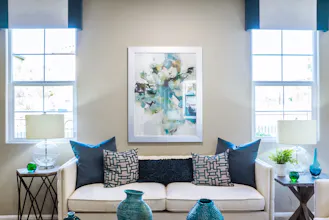
The quiet comfort of our room suite sitting area served as our primary retreat from the resort's busier public zones.
Autumnal Roamer